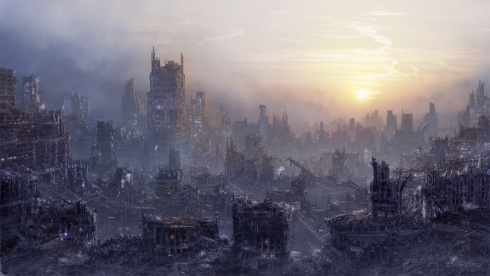
By now everyone must appreciate the value associated with having emergency supplies readily at hand during a major crisis. The situations that developed during the Katrina disaster should only serve to reinforce our goals to be able to take care of ourselves during a national or local emergency. The government responses were sluggish and in many cases ineffective. In this article I will briefly review the requirements for establishing an adequate shelter plan.
A shelter is one of those items high on the list of necessities when a disaster occurs. It is of vital importance that one maintains their health and it is beneficial that as soon as you can get out from amongst the elements the better. In most cases when considering your shelter requirements you will need to determine whether you will be remaining in place or travel to your selected retreat. Both have specific advantages as well as related disadvantages.
Assuming that you are confident that your best chances for survival would be to remain at your home and simply fortify what you have then you would have the advantage of familiarity. You already know your immediate area around your home and the various locations around it which could become detrimental to your survival plans. You likely would not require a "map" since you know your home area like the back of your hand. One of the advantages which you have over the retreat people is you do not have to be concerned with traveling dangerous highways in order to arrive at your retreat and you have the advantage of not needing to transport your survival supplies to another location. To you, I would advise you make adequate back-up plans just in case being at home fails to work out as well as you expect. You should never make the assumption that you will be continually safe at home as situations change and there is the possibility of deterioration of the area. Always have a secondary plan and a retreat to go to if necessary.
The retreat centered survivalists understand that viable change is inevitable and make no assumptions that they are totally secure where they presently are. They have learned to function on the bare minimum of supplies and can easily make due with what they have on hand. In most cases the survival retreats are very well stocked with supplies and equipment. In addition, you have the advantage of being mobile in the unfortunate event that your initial location becomes compromised. Often getting to your retreat can frequently be a difficult task. I try to base my retreat on one tank of gasoline in my BOV. This allows me to pass by dangerous gas station situations with their long waiting lines and potentials of car jacking. You must plan accordingly when your goal is to go to a retreat. It is essential to read between the lines and see the disaster coming. One of the major problems encountered with retreats is the movement of your supplies and equipment so you can expect to have less supplies to work with.
Contrary to commonly accepted arguments those individuals who survivals in a country setting are not necessarily safer or better off then their city neighbors. Surviving in the city is possible however it will require a bit of additional planning. Provisions must be taken to provide for fresh water collections, necessary food storage as well as the defense of your home. In a crisis situation cities will become a refuge for diseases and the fear of fires are ever present. Rioting and looting is expected in the city and will likely be widespread. The key here is to remain hidden and out of view as these kinds of events bring out the worst in human beings. You will encounter hoards of relentless snipers which will make foot travel around the city difficult.
The country dwellers at their retreat will have to deal appropriately with the wandering refugees escaping the city seeking a location which offers them protection. It won't be easy turning people away but you must initially think of your own. A retreat unless it is a group organization will not have an adequate workforce making defense difficult at best. It is a sure bet that any retreat without the proper defense will quickly be overrun by marauders.
Copyright @2010 Joseph Parish
http://www.survival-training.info
For more information relating to survival visit us at http://www.survival-training.info
Article Source: http://EzineArticles.com/?expert=Joseph_Parish
Showing posts with label eathquake survival tips. Show all posts
Tuesday, 2 November 2010
Thursday, 21 October 2010
Disaster Preparedness - 5 Top Tips For Earthquake Survival
By Wayne Bennett
The recent earthquakes in Haiti remind us that we must be prepared. This impoverished country had little to no preparedness in place. We must take steps to become more self reliant and capable of taking care of our own families in an emergency.
I have been involved professionally in emergency response since 1982. In that time I have responded to thousands of emergencies. Mostly of the daily 9-1-1 nature. Some were of a catastrophic nature, including large earthquakes, wild fires and floods. I have also been training the public in disaster preparedness since 1987. What I have come away with is a pattern of unpreparedness by civilians. This led me to create this list of the top 5 things one should do to prepare in the order of importance.
Wayne Bennett is a twenty five year fire captain in southern California. He is also the owner of Survival Skills & Co. a business specializing in Disaster Response training for Schools and Businesses. He has trained over 20,000 persons since 1991 how to save lives in his one day "Disaster Survival Skills" workshops. His company also provides realistic kits and supplies for disaster preparedness. His company provides NIMS training, CPR & First Aid classes. He is a FEMA CERT instructor, American Heart Assoc. Instructor, National Safety Council training center. His training includes Urban Search and Rescue training, Swift water rescue, Ice rescue, High/low angle rope rescue, CSTI earthquake management, etc.
Visit his website at http://www.disastersurvivalskills.com
Article Source: http://EzineArticles.com/?expert=Wayne_Bennett
The recent earthquakes in Haiti remind us that we must be prepared. This impoverished country had little to no preparedness in place. We must take steps to become more self reliant and capable of taking care of our own families in an emergency.
I have been involved professionally in emergency response since 1982. In that time I have responded to thousands of emergencies. Mostly of the daily 9-1-1 nature. Some were of a catastrophic nature, including large earthquakes, wild fires and floods. I have also been training the public in disaster preparedness since 1987. What I have come away with is a pattern of unpreparedness by civilians. This led me to create this list of the top 5 things one should do to prepare in the order of importance.
- "Real" First Aid Kit - This is number one because injuries don't and can't wait. They must be addressed immediately. You must have a kit that can handle problems even when you do not have immediate access to 9-1-1. A "Real" first aid kit is a kit that is more than a owie or boo, boo kit. More than just band-aids and wipes. What you need is a kit with at least CPR barrier mask, trauma dressings, multiple 4x4 gauze dressings, gauze rolls, paramedic scissors, a real splint (not popsicle sticks), sterile water, burn dressing, etc. This is a kit that can manage serious and minor injuries. The ability to stabilize and sterilize can be lifesaving when outside sources become limited or unavailable.
- Utility shutoff tool - The ability to control your gas and water meters is extremely important to minimize property damage and risk to life safety. To reduce the risk of fire and explosions immediately following an earthquake is critical. Always check the gas meter dials to determine a leak. As most leaks will be in the walls or attic of the home and you may not smell gas til it is to late. Look for a non-sparking metal tool that will turn off both your gas and water meters.
- Fire Extinguisher - Since all fires start small, having an extinguisher handy is a great advantage for preserving life and property. Purchase an ABC dry chemical extinguisher. This type will extinguish all three classes of fire (ordinary combustibles, flammable liquids and electrical. Keep a fire extinguisher in the home and car. Periodically check the gauge for pressure.
- Water storage - Even though you may not need water in the next hour. It will become critical to your families survival in the following hours and days. This not something you can get later. Store enough Water - a minimum of one gallon per person per day for 7-14 days for drinking and hygiene. Store tap water in approved barrels and treat with "Water Preserver" for five-year storage. Keep "Water Purification Tablets" on hand to treat any untreated or questionable water. One tablet will treat one quart of water. Never store water in old bleach bottles, milk type plastic containers (as they are made from breathable plastic) in the garage because any fumes from vehicles, paints, solvents, pesticides will contaminate your supply.
- Car Survival Kit - Since we take our cars everywhere, place one in each family members car. You will always be prepared. Store a 3-day food bar, sterile water pouches, medical, warmth (thermal blanket) and lightsticks and flashlight in your kit.
Wayne Bennett is a twenty five year fire captain in southern California. He is also the owner of Survival Skills & Co. a business specializing in Disaster Response training for Schools and Businesses. He has trained over 20,000 persons since 1991 how to save lives in his one day "Disaster Survival Skills" workshops. His company also provides realistic kits and supplies for disaster preparedness. His company provides NIMS training, CPR & First Aid classes. He is a FEMA CERT instructor, American Heart Assoc. Instructor, National Safety Council training center. His training includes Urban Search and Rescue training, Swift water rescue, Ice rescue, High/low angle rope rescue, CSTI earthquake management, etc.
Visit his website at http://www.disastersurvivalskills.com
Article Source: http://EzineArticles.com/?expert=Wayne_Bennett
Subscribe to:
Posts (Atom)
